
Loading...
Serving Bellingham, WA and surrounding areas. (360) 603-9790
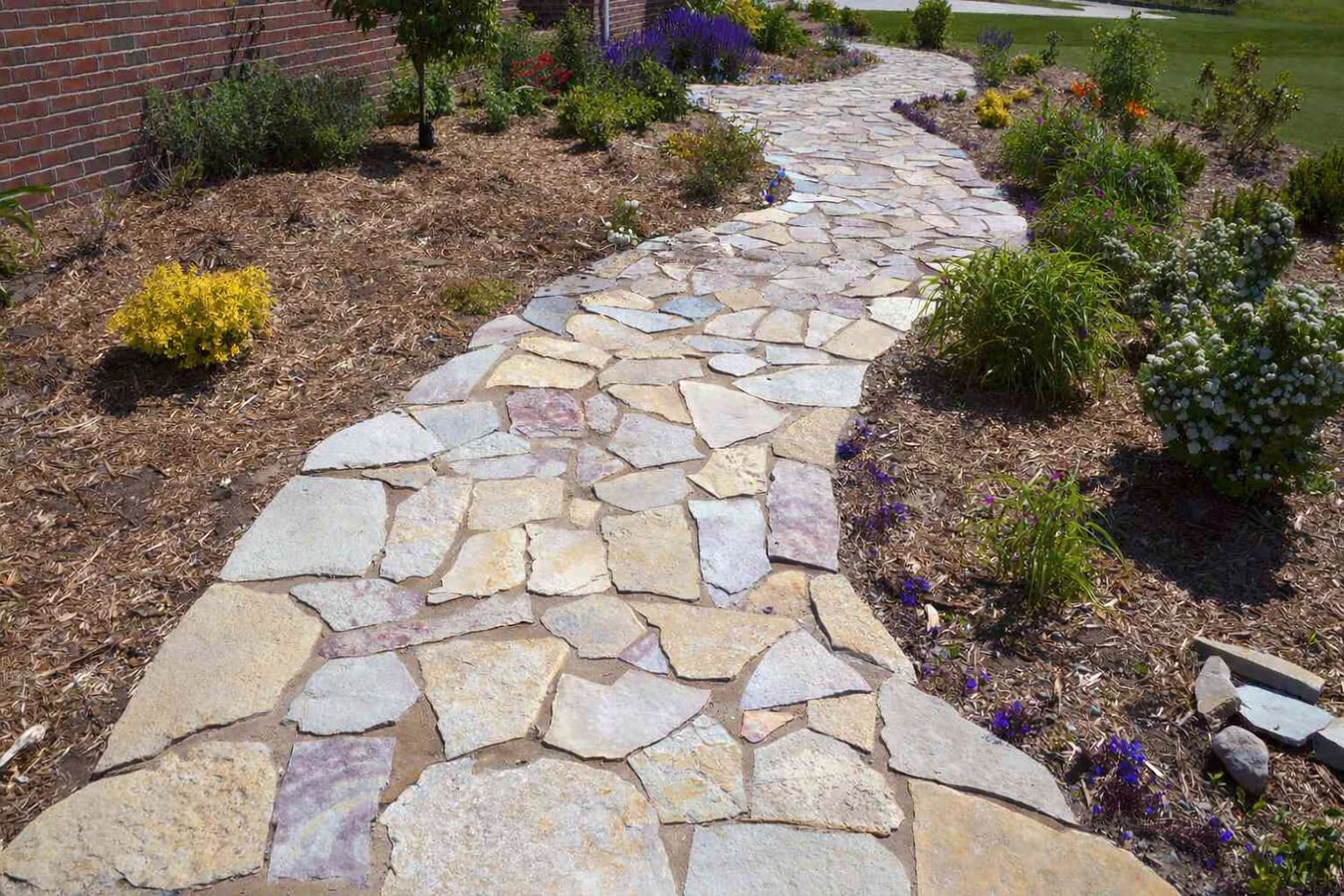
Cracked, tilted, and slippery walkways are a problem every Bellingham winter. We build new paths with proper drainage and a solid base so yours stays level and safe for decades.
Walkway construction in Bellingham, WA means removing the old surface, shaping the ground, compacting a gravel base, and installing the material you choose - concrete, pavers, or stone - with a built-in slope so water drains away from your house, and most residential paths are complete in one to three days.
A lot of Bellingham homes - especially in the Lettered Streets neighborhood, Sehome, and South Hill - have original concrete walkways poured in the 1950s and 1960s. Those paths are often cracked, too narrow, and built without the drainage considerations that matter in a city that gets close to 57 inches of rain a year. If your path feels rough underfoot or collects puddles after a storm, the surface is usually not the real problem - the base underneath is.
If you are updating your driveway at the same time, our driveway pavers service can tie into your new walkway with matching materials for a consistent finished look across your whole front yard.
If you have patched the same crack two or three times and it reopens every winter, the surface is not the problem - the base underneath has failed. In Bellingham, water seeps into cracks, freezes during cold snaps, and forces them wider. Repeated patching is a sign the whole walkway needs to be rebuilt with a proper compacted base.
Walk your path slowly and notice whether any sections shift when you step on them. Unstable sections are a trip hazard - especially for older family members - and usually mean the ground beneath has settled or washed out. This is common in Bellingham's clay-heavy soils, which move more than most homeowners expect.
If water pools on your walkway after a rainstorm instead of running off to the side, the slope is wrong or the surface has settled into a low spot. In a city that gets Bellingham's rainfall, standing water on a path is both a slip hazard and an accelerant for surface deterioration. A rebuilt walkway with proper drainage sheds water cleanly every time.
When the top layer of concrete starts to chip off or the surface feels pitted and rough, the material has reached the end of its useful life. This kind of breakdown is faster in Bellingham's wet winters. Once the surface starts to go, water gets in more quickly and the problem speeds up - replacing it now costs less than waiting.
We install walkways in poured concrete, concrete pavers, and natural stone for residential properties across Bellingham and Whatcom County. Every project starts with removing the existing surface, assessing the ground conditions, and building a properly compacted gravel base - usually four to six inches deep - before any surface material goes down. That base layer is what determines whether your path holds up for three years or thirty, and it gets the same attention on a simple front path as it does on a more complex curved layout with steps.
Many homeowners pair a new walkway with a brick wall installation along the edges for definition and curb appeal - a combination that works especially well on Bellingham properties with older architectural styles. We handle both in a single project so the materials and finishes are consistent from the start.
The most affordable and lowest-maintenance option - suits homeowners who want a clean, durable path and are not planning to change the layout again soon.
Good for homeowners who want flexibility - individual pavers can be lifted and reset if a section settles, and the pattern choices allow for more visual interest.
Flagstone, bluestone, and similar materials suit properties with naturalized gardens, mature trees, or rustic exterior styles where a more organic look fits the setting.
For sloped Bellingham lots where a flat path alone would not work - steps integrated into the walkway design keep the path safe and usable on grades that would otherwise be a hazard.
Bellingham averages around 57 inches of rain a year, and the wettest stretch runs from October through March. A walkway that does not drain properly becomes a standing water problem within the first wet season - slippery, deteriorating faster, and potentially directing water toward your foundation. Bellingham also sits on glacially deposited soils with significant clay content in many neighborhoods. Clay holds water and shifts more than sandy or gravelly ground, so the base preparation under a new walkway needs extra attention to keep the surface from settling unevenly within a few years.
The freeze-thaw cycles Bellingham gets from November through March are harder on walkways than the rain itself - water that gets under a surface and freezes will widen any small gap within one or two winters. We build every path with a cross-slope that sheds water to the side, and we use base material and compaction methods matched to the soil conditions on your specific property. We serve homeowners in Ferndale and Lynden where the same clay soils and wet winters make drainage the deciding factor in how long a new walkway holds up.
Permit requirements for walkway and hardscape projects are documented by City of Bellingham Development Services. Drainage and slope guidance for residential paths is published by the University of Minnesota Extension.
Reach out by phone or through the contact form and we will respond within one business day. We will ask a few basic questions - roughly how long the walkway is, what material you have in mind, and whether there is existing concrete to remove - then schedule a time to see the site in person.
We walk the path with you, check the slope, look at the existing surface and soil conditions, and ask about your goals. You will receive a written estimate before we leave or within one business day - no obligation, no pressure, and no surprise line items added later.
The crew removes the old surface and hauls it away. Then the ground is shaped, compacted, and fitted with a gravel base layer - the most important part of the whole job. Drainage slope is set at this stage so water runs off to the side rather than pooling or running toward your house.
The chosen material is installed, edges are finished, and the site is cleaned up before the crew leaves. If you chose poured concrete, we tell you exactly when it is safe to walk on - typically 24 to 48 hours. We do a final walkthrough together to confirm everything is right.
We will come to your property, walk the path with you, and give you a clear written estimate - no obligation, no sales pitch.
(360) 603-9790We assess the ground conditions on your specific property before deciding on base depth and drainage slope. Clay-heavy soils common across Bellingham need more compaction and a deeper gravel base than sandy ground - and we account for that in every project rather than using a one-size-fits-all approach.
You will receive a clear, itemized written estimate before we pick up a single tool. If we find something unexpected during demolition - like a soft spot in the base that needs more material - we call you before making a decision that affects your bill. The number you agreed to is the number you pay.
Washington State requires all construction contractors to be registered with the Department of Labor and Industries and carry active liability insurance. You can verify our registration status in minutes at the L&I website. That registration protects you if anything goes wrong during or after the project.
We know which walkway projects in Bellingham require a permit from City of Bellingham Development Services and which do not. When a permit is needed - for projects involving significant grading or right-of-way work - we handle the application and scheduling so you do not have to navigate that process yourself.
Every walkway we build is backed by the same process - proper assessment, honest pricing, and a base that is built for Bellingham winters. If the job is done right the first time, you should not need to call anyone back.
Add brick edging or a low garden wall alongside your new path for a finished look that holds up through Bellingham winters.
Learn MoreExtend the same paver material from your walkway into the driveway for a consistent, low-maintenance front yard surface.
Learn MoreSpring booking slots fill quickly - reach out now and lock in your project before the dry season rush starts.