Loading...
Serving Bellingham, WA and surrounding areas. (360) 603-9790
Bellingham Masonry & Concrete is a licensed masonry contractor serving Lynden, WA, specializing in retaining wall construction, foundation repair, and chimney work. We have been working throughout Whatcom County since 2020 and understand the drainage challenges and freeze-thaw wear that Lynden homes face every year.
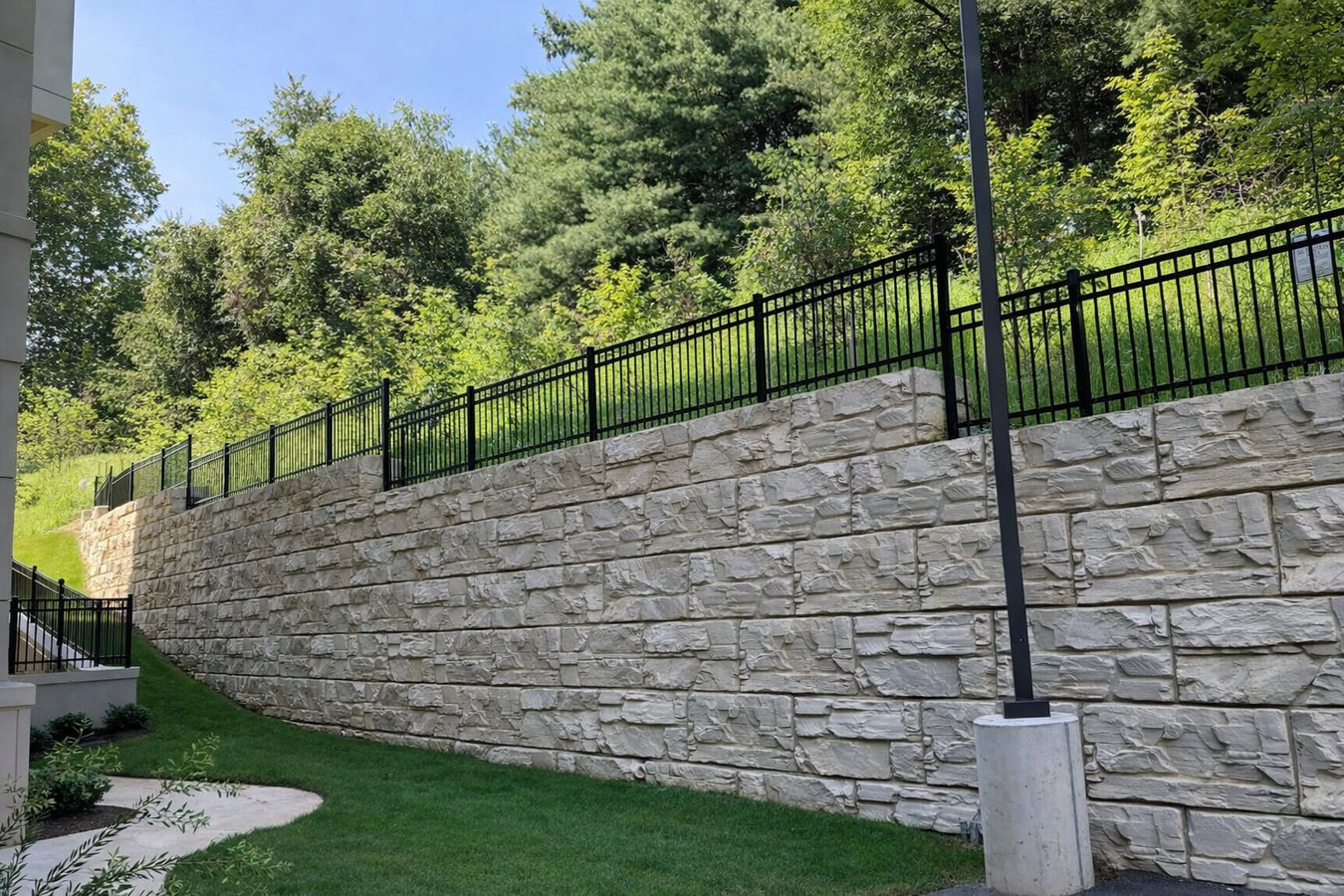
Lynden's flat valley land and clay-heavy soils hold moisture for months, and sloped yards or raised beds can shift without proper support. We build masonry retaining walls with drainage systems sized for Lynden's wet winters - see our full retaining wall construction process for details on how we handle drainage and permitting.
Lynden sits on low-lying Nooksack River valley land where water tables are high and clay soils expand when wet. Homes from the 1960s through 1980s - a large share of Lynden's housing stock - often show foundation cracks and settling after decades of seasonal moisture cycles.
Lynden winters bring regular freezing temperatures, and chimneys take the full force of every freeze-thaw cycle from November through March. Older Lynden homes with original brick chimneys often have mortar joints that have softened or cracked from decades of exposure.
Many Lynden properties - especially those near the edge of town with larger lots - use concrete block walls for yard boundaries, outbuilding bases, and garden structures. Block walls built on Lynden's saturated soils need proper footings to prevent seasonal shifting.
The older brick homes in Lynden's downtown core and Dutch Heritage District were built with softer lime-based mortars. When mortar joints fail in Lynden's wet climate, water gets behind the brick - and tuckpointing with the right mortar hardness stops that before it becomes a structural issue.
Lynden's freeze-thaw cycles crack poured concrete sidewalks and steps every winter. Properly installed masonry walkways with adequate sub-base preparation and drainage hold up better in Lynden conditions than poured slabs with minimal depth.
Lynden sits in the Nooksack River valley on flat, low-lying land where the water table is high and drainage is slow. The city gets around 50 inches of rain per year, with the bulk falling between October and April. That means crawl spaces, foundations, and anything buried in the ground stays wet for five to six months straight. Clay-heavy soils typical of this valley expand when saturated and shrink back as they dry out - that seasonal movement puts constant pressure on foundations, concrete slabs, and masonry walls over time. Homes built in the 1960s and 1970s on this land are now showing the cumulative effect of fifty-plus years of that cycle.
Lynden winters also bring regular freezing temperatures, with average January lows in the mid-20s Fahrenheit. When water trapped in masonry or concrete freezes, it expands and forces mortar joints and surface material apart. That freeze-thaw cycle repeats a dozen or more times each winter, and by spring the damage is visible: cracked driveways, spalled brick faces, and shifted retaining walls. New subdivisions on the south and east sides of Lynden add another wrinkle - homes built on recently graded land can experience settling and drainage issues in the first few years as the disturbed soil stabilizes. Masonry work here needs to account for both the older valley floor conditions and these newer development sites.
Our crew works throughout Lynden regularly, and we understand the local conditions that affect masonry contractor work here. Projects requiring structural masonry work go through the City of Lynden Building Department for permitting. We know the permit thresholds - retaining walls over four feet, structural foundation work, and any load-bearing masonry changes all require a permit here - and we handle that process on your behalf.
Lynden has a strong sense of community identity tied to its Dutch heritage, and that shows in how homeowners maintain their properties. The Dutch Windmill in downtown Lynden and the Lynden Pioneer Museum on Front Street are landmarks that most residents know well. Many homes near the downtown core are older, with brick details that require careful material matching. Out toward Hannegan Road and the newer subdivisions on the east side, the homes are more recent but the drainage and soil challenges are the same.
Lynden is about 15 miles north of Bellingham along Highway 539, and we work throughout the corridor. We also serve Everson, just a few miles east of Lynden along the Nooksack River, where many of the same valley soil and drainage conditions apply. If your neighbor in Lynden or Everson has recommended us, that is the kind of referral we rely on.
Reach us by phone or through the contact form. We respond within 1 business day and ask a few basic questions about your Lynden property - the age of the home, what you are seeing, and where on the property the issue is.
We visit the property, walk through the masonry issues with you, and give you a written estimate covering scope, materials, cost, and whether a City of Lynden permit is required. No surprise costs after you sign.
Most residential masonry jobs in Lynden take one to four days depending on scope. We schedule exterior work around dry weather windows, since mortar and concrete need dry conditions to cure - especially important given Lynden's long wet season.
When work is complete, we walk you through what was done and hand over any warranty paperwork and permit sign-off documentation in writing. That permit record matters if you sell the home later.
We serve all of Lynden - from downtown to the newer subdivisions off Hannegan Road. Call us or send a message and we will respond within 1 business day. Free estimates, no pressure.
(360) 603-9790Lynden is a city of about 16,000 people in Whatcom County, sitting roughly 15 miles north of Bellingham and a few miles south of the Canadian border. The community has deep Dutch roots - Dutch immigrants settled the area in the late 1800s and early 1900s, and that heritage is still visible in the downtown architecture, the Dutch Windmill landmark, and the Lynden Pioneer Museum on Front Street. Surrounding farms - dairy operations and berry fields - still define the landscape around the city. The housing stock is a mix of postwar single-family homes from the 1950s through 1980s and newer subdivisions built in the 2000s and 2010s on the south and east edges of town.
Owner-occupied homes make up the majority of Lynden's housing, and the community places real value on property upkeep and neighborhood appearance. Most of the older homes are wood-frame construction on modest lots, while newer developments near Hannegan Road feature larger footprints and attached garages. Nearby, Everson sits just a few miles to the east along the Nooksack River, and we work there regularly as well - the soil and drainage conditions across the valley are consistent enough that the same masonry knowledge applies in both communities.
Restore your foundation's strength and protect your home from further damage.
Learn MoreBuild strong retaining walls that hold soil and transform your landscape.
Learn MoreAdd a beautiful, functional masonry fireplace to any room in your home.
Learn MoreUpgrade your exterior or interior with natural-looking stone veneer.
Learn MoreConstruct solid concrete block walls for privacy, security, and structure.
Learn MoreInstall durable block foundations built to support your structure for decades.
Learn MoreCreate a custom outdoor kitchen built to handle the Pacific Northwest climate.
Learn MoreDesign and build safe, attractive walkways using brick, stone, or pavers.
Learn MoreBuild long-lasting brick walls for your garden, perimeter, or property.
Learn MoreRework deteriorated mortar joints to seal and strengthen existing brickwork.
Learn MoreCall or send a message today. We cover all of Lynden and the surrounding Nooksack valley and respond within 1 business day.